How Were the Top 10 Custom Cable Assembly Manufacturers Chosen?
This shortlist uses application fit, manufacturing capabilities, testing evidence, quality documentation, location, and sourcing model. Official manufacturer pages supplied the company facts, but manufacturer-published claims still require verification during the RFQ process.
“Top 10” is an editorial shortlist, not a ranking from best to worst. The selection keeps specialist differences visible, including mechanical wire-rope work, general electrical harnesses, RF assemblies, and controlled aerospace interconnects.
What should buyers compare besides price?
Compare drawing review and design-for-manufacture support before evaluating unit cost. Ask how the supplier handles prototypes, production capacity, test reports, engineering changes, component traceability, and delivery logistics. Responsiveness also matters: define who answers technical questions, approves substitutions, and reports schedule risks.
Which Cable Assembly Manufacturers Made the Top 10?
This is a global, unranked shortlist of ten real manufacturers selected for relevant published capabilities and market visibility. The right choice depends on the assembly, its compliance needs, and the program’s commercial constraints.
WellPCB
WellPCB states that it makes custom cable assemblies in China and accepts OEM and ODM work. Its published prototype-to-production service covers wire harnesses, overmolded, RF/coax, medical, industrial, robotics, and box-build assemblies, with no MOQ from one to 10,000+ units. The company says it performs 100 percent continuity testing, hi-pot testing up to 1500 V DC, crimp-force monitoring, and serial-level logging. It may fit buyers combining PCBA, harness, and box-build work. Cross-border logistics, thin independent review evidence, and conflicting published gauge and lead-time ranges require RFQ clarification.
Epec Engineered Technologies
Epec lists New Bedford, Massachusetts, and states that it supports customer-print builds, design input, CAD, short runs, testing, and medical, military, shielded, harness, and overmolded assemblies. Its site displays UL, ITAR, RoHS, ISO 9001, and ISO 27001 credentials. It may fit complex OEM development, but buyers should confirm the build site, current certificate scope, capacity, lead time, and total quoted cost.
Meridian Cable
Meridian states that its assemblies are made in the USA at its Northeast Florida operation. Published capabilities include RF, SMA, coaxial, shielded, ribbon, molded, coil-cord, and harness work, plus design through production support. The company says every product receives continuity, integrity, polarity, and functional testing. It may suit buyers wanting local engineering breadth, subject to verification of certificate scope, capacity, report format, and schedule.
Lexco Cable
Lexco describes itself as a specialist in mechanical wire-rope assemblies, including push-pull controls, lanyard-type products, cable railings, and bungee cords. The company publishes swaging, crimping, cutting, coating, fittings, terminations, load testing, rapid prototypes, and scalable production. It may fit mechanical control or safety applications. It is not a substitute for an electrical harness supplier when a cable carries power or signals.
CableConn Industries
CableConn states that it stocks interconnect products in San Diego and builds simple wire preparations through high-density, military, commercial aerospace, shielded, flat, and coaxial assemblies. Published processes include potting, overmolding, hermetic sealing, harness boards, and project-specific functional tests. It may fit complex controlled programs, but buyers should verify current AS9100 or ISO scope, export-control suitability, test evidence, capacity, and domestic economics.
Cables Unlimited
Cables Unlimited lists Yaphank, New York, and publishes wire-harness, fiber-optic, wireless, and harsh-environment breadth for medical, military, industrial, telecommunications, automotive, and energy uses. The company describes itself as an IPC-620 certified manufacturer and says training covers soldering, stripping, crimping, and securing. It may fit domestic specialist programs, but buyers should request the exact qualification, personnel credentials, facility scope, and test records.
Glenair
Glenair lists headquarters in Glendale, California, and states that it provides design, fabrication, and testing for military and commercial aerospace interconnects. Its published in-house cable range includes controlled-impedance, coaxial, rugged power, shielded, overbraided, environmental, fiber-optic, and wired-conduit assemblies. It may fit mission-critical or harsh-environment programs. That specialization may add unnecessary program cost for straightforward commercial work.
Consolidated Electronic Wire & Cable
Consolidated states that it designs and fabricates wire, cable, assemblies, and harnesses, with in-house modeling, molding, tooling, soldering, welding, crimping, braiding, and testing. The company states ISO 9001:2015 certification and more than 100 years of experience. Its breadth may simplify a fragmented supply chain, but buyers must verify current certificate scope and product-specific medical, military, aerospace, or automotive evidence.
Galaxy Wire & Cable
Galaxy states that it supports design and prototypes through large runs with low minimums, from single-conductor products to assemblies exceeding 1,000 test points. The company says its quality personnel are IPC/WHMA-A-620 certified, can build Classes 1, 2, and 3, and can provide continuity and hi-pot reports. It may fit documented low-minimum electrical work, subject to personnel, facility, report-format, availability, and lead-time checks.
Precision Cable Assemblies
Precision Cable Assemblies states that it manufactures in Wisconsin, Mexico, and China, supported by US warehousing and international logistics. Published work includes harnesses, battery cables, overmolded assemblies, CAD, prototypes, PPAP coordination, revision control, and launches. Its site states ISO 9001 and IATF 16949 certification. The hybrid footprint may suit programs balancing logistics and labor cost, but the RFQ must name the facility, certificate scope, transport plan, minimums, and schedule.
How Should You Compare a Cable Assembly Manufacturer Before Requesting a Quote?
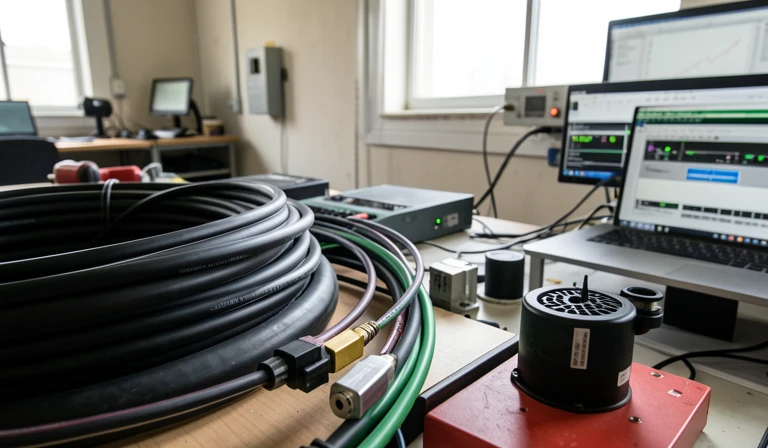
Verify application capability and quality evidence first. Then compare prototype terms, production capacity, landed cost, and technical support.
This table is a screening summary. Provider facts are manufacturer-published statements requiring RFQ verification, while application-fit and logistics notes are editorial considerations.
What evidence should an RFQ request?
Request current certificates showing the issuing body, number, facility and activity scope, issue date, and expiry. Also require sample inspection and test reports, connector and wire traceability, the first-article process, approved-substitution rules, tooling ownership, revision control, and defect-remedy terms. The IPC Qualified Manufacturers List can help check IPC/WHMA-A-620 QML status, while UL Product iQ can verify a published UL file or product certification.
What should a cable assembly drawing include?
Define wire and cable part numbers, connectors, contacts, pinout, lengths, tolerances, labels, shielding, jacket or overmold materials, branch geometry, workmanship class, and acceptance tests. Add revision identification, approved alternatives, critical-to-quality dimensions, serialization needs, packaging, and any environmental or regulatory requirements.
Which Medical Cable Assembly Manufacturers and Military Cable Assembly Manufacturers Fit Specialized Programs?
Medical and military work requires evidence tied to the exact facility, process, and product, not a logo on a website. No manufacturer is universally best, so compare the published capability with the quoted assembly’s controls and validation plan.
Epec publishes medical-device and military assemblies; CableConn publishes aerospace, defense, and medical work with sealing and functional testing; and Cables Unlimited names medical and military harness applications. Glenair’s stated focus is military and commercial aerospace, including rugged and environmental products. Consolidated publishes configurable regulatory and environmental characteristics, while Galaxy states Classes 1, 2, and 3 workmanship capability and electrical reports. Meridian offers USA-made engineering and product testing, and WellPCB publishes medical assemblies, Class 2 and Class 3 workmanship, serial test logging, and quality-system compliance claims. Each statement needs facility-level confirmation.
What should medical OEMs verify?
Verify quality-system scope, specified IPC/WHMA-A-620 workmanship class, process validation, inspection and test records, lot traceability, and change notification. Where relevant, define sterilization compatibility and biocompatibility requirements. Do not assume a company-wide certificate covers the build facility, process, or assembly.
What should military and aerospace buyers verify?
Confirm facility and program quality scope, the required workmanship class, ITAR or other export-control handling where applicable, environmental testing, validation records, lot traceability, and change approval. Require evidence for the exact construction and acceptance criteria rather than relying on a displayed credential.
Which Coaxial Cable Assembly Manufacturers Fit RF Projects?
RF buyers should shortlist suppliers by frequency, impedance, connector system, shielding, bend requirements, environmental needs, and available test evidence. Manufacturer-published capabilities identify plausible candidates, but they do not establish performance for a quoted design.
WellPCB publishes RG58, RG174, and RG316 work, 50 or 75 ohm impedance, RF connector options, and S-parameter validation, including an unverified claim of operation up to 40 GHz. Meridian lists SMA, RF, shielded, and coaxial products. CableConn publishes coaxial and shielded constructions, while Glenair publishes controlled-impedance coax and rugged shielding. Consolidated says electrical, flexibility, and environmental properties can be customized. Galaxy’s continuity and hi-pot reporting may support electrical acceptance, but its page does not establish RF limits. Cables Unlimited’s published wireless breadth makes it worth screening, with coaxial capability and RF evidence to be confirmed.
What RF test data should the supplier provide?
Request insertion loss, return loss or VSWR, impedance, and phase matching when applicable. Add continuity and hi-pot where specified, identify the test fixture and calibration method, and define whether results are recorded by serial number or lot. Set limits on the drawing because no provider’s general webpage proves design-specific performance.
Should You Choose Cable Assembly Manufacturers Near Me or Source From China?
Domestic sourcing is often better for rapid collaboration, controlled programs, low freight risk, and urgent changes. China sourcing can suit cost-sensitive prototypes through volume when specifications and quality controls are mature.
Compare landed cost rather than unit price, including tooling, tariffs, freight, inspection, and the potential cost of a quality escape. Domestic supply can improve time-zone overlap, site access, change response, and handling of export-sensitive work. China supply may fit planned schedules and scalable demand, but requires clear IP controls, incoming inspection, and allowance for cross-border lead-time variability. Precision Cable Assemblies illustrates a hybrid footprint spanning Wisconsin, Mexico, and China with US warehousing, although the quoted production site still determines risk.
Decision checklist
- Is the drawing mature enough to build without frequent live engineering changes?
- Which site will build the assembly, and can its quality evidence be verified?
- What are the tooling terms, minimums, tariffs, freight, and realistic door-to-door schedule?
- Do IP, export-control, site-access, or resilience requirements narrow the geography?
- What containment and remedy apply if incoming inspection finds a quality escape?